AWS Storage Comparison
AWS Tutorial: AWS Storage Comparison
Welcome to the AWS Storage Comparison lesson. You have learned about Instance Stores, EBS, S3, and EFS. Now let's put them side-by-side so you know exactly when to use each service.
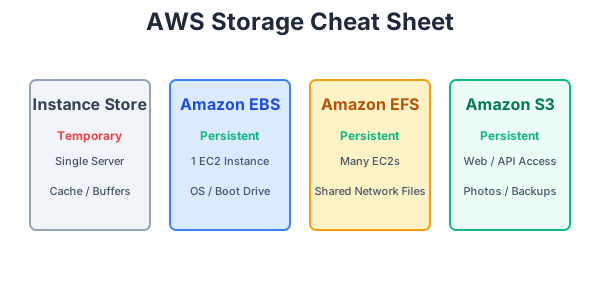
Why Learn Storage Comparison?
In the AWS Certified Cloud Practitioner exam, and in real-world architecture planning, you will constantly be faced with the question: "Which storage service should I use for this specific scenario?" Memorizing this matrix guarantees you make the right choice.
Tutorial Overview
In this tutorial, we will review a cheat sheet that compares the persistence, scope, and primary use cases of the four major storage types in AWS.
The Ultimate Storage Cheat Sheet
| Feature | EC2 Instance Store | Amazon EBS | Amazon EFS | Amazon S3 |
|---|---|---|---|---|
| Storage Type | Block | Block | File | Object |
| Persistence | Ephemeral (Temporary) | Persistent | Persistent | Persistent |
| Scope / Attachment | Single physical server | Single EC2 instance | Thousands of EC2 instances | Web/API (Not attached to EC2) |
| Availability Zone | Locked to single host | Locked to single AZ | Multi-AZ | Regional |
| Best Use Case | Caches, scratch data, buffers | Operating systems, high-speed DBs | Shared file systems, WordPress media | Static assets, backups, archives |
Exercise
?You are architecting an application that requires 5 EC2 instances to simultaneously read and write to a shared repository of user-generated documents. Which storage solution should you use?