AWS Infrastructure
AWS Tutorial: AWS Global Infrastructure
Welcome to the AWS Global Infrastructure lesson. Before provisioning any services, it's vital to understand how AWS physically structures its data centers worldwide.
Why Learn AWS Infrastructure?
Knowing where your applications run affects their performance, legal compliance, and fault tolerance. Learning how AWS designs Regions and Availability Zones enables you to build highly available and disaster-resistant systems.
Tutorial Overview
In this tutorial, you will learn about:
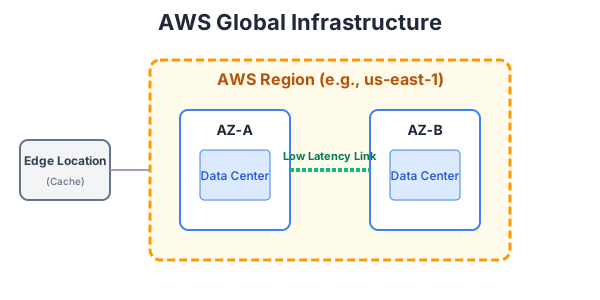
- AWS Regions: Geographical locations housing data centers.
- Availability Zones (AZs): Distinct data center clusters within a Region.
- Edge Locations: Points of presence used for fast content delivery.
Regions and Availability Zones
- AWS Regions: A Region is a physical location in the world where AWS has multiple Availability Zones. Examples include
us-east-1(N. Virginia) andeu-west-1(Ireland). Choosing the right region reduces latency for your end users and complies with data residency laws. - Availability Zones (AZs): An AZ consists of one or more discrete data centers, each with redundant power, networking, and connectivity, housed in separate facilities. These AZs provide high availability and fault tolerance. If one AZ goes down, the others remain operational.
Edge Locations
- Edge Locations are endpoints for AWS used for caching content. They are primarily utilized by Amazon CloudFront, AWS's Content Delivery Network (CDN), to deliver data, videos, applications, and APIs to customers globally with incredibly low latency.
Exercise
?What is a distinct location within an AWS Region that is engineered to be isolated from failures in other locations?