AWS SQS
AWS Tutorial: Amazon Simple Queue Service (SQS)
Welcome to the Amazon SQS lesson. SQS is a fully managed message queuing service that enables you to decouple and scale microservices, distributed systems, and serverless applications.
Why Learn Amazon SQS?
SQS is actually the oldest AWS service (launched all the way back in 2004!) and remains incredibly popular today. Learning SQS teaches you how to build asynchronous, resilient applications that can handle sudden massive spikes in traffic without losing a single piece of user data.
Tutorial Overview
In this tutorial, you will learn:
- How the Amazon SQS architecture works.
- The difference between Message Producers and Message Consumers.
- Standard Queues vs FIFO (First-In-First-Out) Queues.
How SQS Works
SQS uses a robust "pull" (or polling) mechanism:
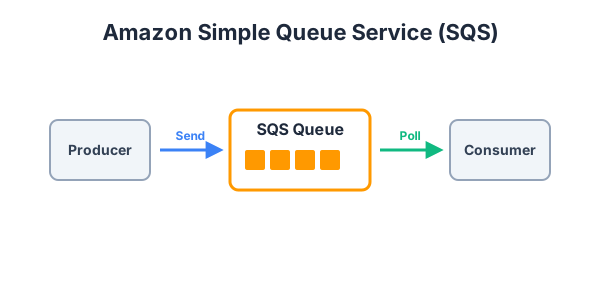
- A Producer application creates a message (like an order confirmation or an image processing task) and sends it to the SQS queue.
- The message safely sits in the AWS cloud queue until a server is ready to process it.
- A Consumer application periodically checks (polls) the queue for new messages, executes the required processing, and then explicitly deletes the message from the queue so it isn't processed twice.
SQS Queue Types
AWS offers two main types of queues to fit different requirements:
- Standard Queues: Offer maximum throughput, best-effort ordering, and at-least-once delivery. This means messages might occasionally be delivered out of order, or a duplicate message might theoretically be delivered. Highly scalable.
- FIFO (First-In-First-Out) Queues: Designed to guarantee that messages are processed exactly once, in the strict, exact order that they were sent by the producer. They have a lower total throughput limit compared to standard queues but ensure absolute data integrity and sequence.
Exercise
?If your banking application requires that financial transaction messages are processed in the exact order they were received without any duplicates, which queue type should you use?