AWS Migration Strategies
AWS Tutorial: AWS Migration Strategies (The 6 R's)
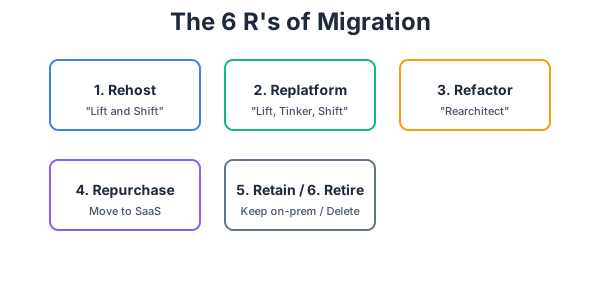
Welcome to the Migration Strategies lesson. When moving an application to the cloud, you do not use the same strategy for every app. AWS identifies six common strategies, known as the "6 R's".
Why Learn the 6 R's?
Understanding these strategies is crucial for passing AWS certifications and proving that you know how to architect cost-effective business solutions. Not every legacy application should be moved to the cloud!
Tutorial Overview
In this tutorial, you will learn the 6 R's of cloud migration:
The 6 R's Explained
- Rehosting (Lift and Shift): Moving your applications exactly as they are without making any changes to the code. You simply copy the server to an EC2 instance. It is the fastest way to migrate.
- Replatforming (Lift, Tinker, and Shift): Making a few small cloud optimizations to achieve a tangible benefit without changing the core architecture. (e.g., migrating your database to Amazon RDS instead of hosting it on EC2).
- Refactoring / Architecting: Completely reimagining how the application is architected to take full advantage of cloud-native features (e.g., rewriting an old monolith application into serverless AWS Lambda functions). Highest cost upfront, but lowest long-term cost.
- Repurchasing (Drop and Shop): Abandoning your old legacy software entirely and moving to a completely different Software as a Service (SaaS) product (e.g., dropping a custom HR system and moving to Salesforce or Workday).
- Retaining (Do Nothing): Keeping the application on-premises because it is too difficult to move, requires strict physical compliance, or was recently upgraded.
- Retiring: Turning the application off entirely. Once you map your IT portfolio, you often find apps that no one uses anymore. Retiring them saves money instantly.
Exercise
?Which migration strategy involves modifying an application to utilize managed cloud services (like moving a self-hosted database to Amazon RDS) without entirely rewriting the core code?