AWS Edge Locations
AWS Tutorial: AWS Edge Locations
Welcome to the Edge Locations lesson. To serve global customers at blazing fast speeds, AWS uses Edge Locations to cache data as close to the user as physically possible.
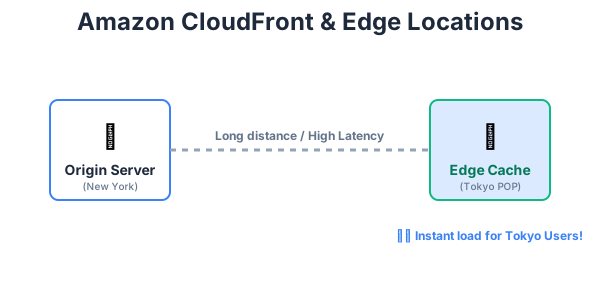
Why Learn About Edge Locations?
If your primary web server is in New York, a user in Tokyo will experience a massive delay (latency) trying to load your images. Learning how Edge Locations work allows you to utilize Content Delivery Networks (CDNs) to fix this global latency issue.
Tutorial Overview
In this tutorial, you will learn:
- What an Edge Location is.
- How caching works using Amazon CloudFront.
What is an Edge Location?
An Edge Location is an AWS datacenter designed specifically to deliver services with the lowest latency possible. Unlike AWS Regions which hold massive computing power and databases, Edge locations are primarily used to cache (temporarily store) static content like videos, images, and HTML files.
There are significantly more Edge Locations globally than there are AWS Regions.
Amazon CloudFront
AWS uses a service called Amazon CloudFront to distribute content to these Edge Locations. When a user in Tokyo requests a video from your server in New York, CloudFront fetches the video once and saves a copy in the Tokyo Edge Location. The next user in Tokyo who wants that video downloads it instantly from the local Edge Location, not all the way from New York!
Exercise
?Which AWS service primarily utilizes Edge Locations to cache and deliver static content globally?