AWS EKS
AWS Tutorial: Amazon Elastic Kubernetes Service (EKS)
Welcome to the Amazon EKS lesson. While Amazon ECS is the AWS-native way to orchestrate containers, many companies prefer to use the open-source industry standard: Kubernetes.
Why Learn Amazon EKS?
Kubernetes (K8s) is the most popular container orchestration platform globally. Because it is open-source, learning Kubernetes allows your skills to be completely cloud-agnostic (the exact same K8s configurations work on AWS, Google Cloud, and Microsoft Azure). Amazon EKS is how you run Kubernetes on AWS effectively.
Tutorial Overview
In this tutorial, you will learn:
- What Amazon EKS is.
- The difference between the Kubernetes Control Plane and Worker Nodes.
- Why a managed service like EKS is preferred over installing Kubernetes manually.
Control Plane vs. Worker Nodes
A Kubernetes cluster is divided into two primary parts:
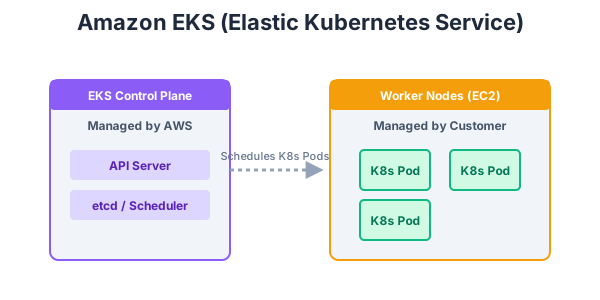
- The Control Plane (Master Node): This is the brain of Kubernetes. It manages the cluster, schedules containers, monitors health, and stores the state of the system. Installing, securing, and backing up the Control Plane is notoriously difficult.
- Worker Nodes: These are the EC2 servers (or Fargate profiles) where your actual application containers (Pods) run.
The Magic of EKS
With Amazon EKS, AWS completely manages the Control Plane for you. It automatically spans across multiple Availability Zones for high availability, patches it, and secures it. All you have to do is attach your Worker Nodes and deploy your applications using standard Kubernetes commands (like kubectl).
Exercise
?What significant administrative burden does Amazon EKS remove for you?