AWS Databases
AWS Tutorial: Amazon Relational Database Service (RDS)
Welcome to the AWS Databases lesson. While you can install a database directly onto an EC2 instance, managing backups, patching, and high-availability is a nightmare. Enter Amazon RDS.
Why Learn Amazon RDS?
Relational databases (SQL) are the backbone of most traditional web applications, banking systems, and ERPs. Learning Amazon RDS allows you to launch highly available, automated databases without needing a dedicated Database Administrator (DBA).
Tutorial Overview
In this tutorial, you will learn:
- What Amazon RDS is.
- The benefits of a Managed Database service.
- Amazon Aurora.
What is Amazon RDS?
Amazon Relational Database Service (Amazon RDS) is a managed service that makes it easy to set up, operate, and scale a relational database in the cloud. It provides cost-efficient and resizable capacity while automating time-consuming administration tasks such as hardware provisioning, database setup, patching, and backups.
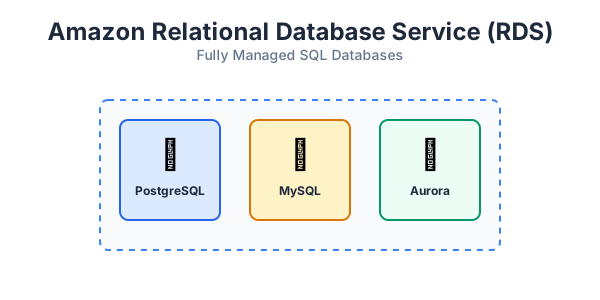
RDS supports six familiar database engines: Amazon Aurora, PostgreSQL, MySQL, MariaDB, Oracle Database, and SQL Server.
Amazon Aurora
Amazon Aurora is AWS's flagship, custom-built relational database engine. It is fully compatible with MySQL and PostgreSQL, but it is designed to be up to 5 times faster than standard MySQL databases at a fraction of the cost of commercial databases like Oracle.
Exercise
?Which of the following database engines is custom-built by AWS to be up to 5x faster than standard MySQL?